
"This is not a pornographic story, it is a biblical story."
——Max
from the end, the
long tunnel is filled with the smell of decay and dryness. Love and sexuality suddenly transformed into mutual protection. At twilight, a hole was cracked in the dark clouds, and some morning light fell. A pair of men and women supported and moved their steps. They were not moisturized or moved by the morning light. There were still some regrets and a little perish in their minds, but it was soon After two gunshots, the smoke went out. It is difficult to say whether death took them away or they took away death, at least they have not been afraid of death.
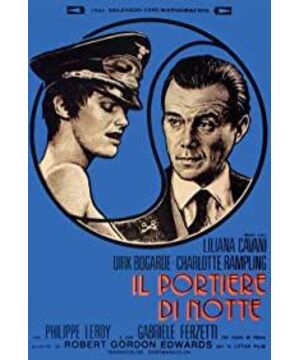
There are divergent opinions on the death of [Night Gatekeeper] at the end. Among them, there is no lack of needles, they say this is a kind of escape, deceit or even another kind of climax. Of course, most of the arguments are based on the sexual abuse itself, deliberately downplaying the emotional factors, and even not mentioning the love for the hero and the heroine, which is somewhat suspected of being deceived. If this is the case, the word "erotic" in the film simply changes its position, and it's not uncommon to call it "pornographic film" grandiosely. However, in my opinion, "sexual abuse" is just a cover. The subtle relationship between sex and love and the exploration of the inner world of the characters are the essence of the film. The death at the end of the film completes the awakening of self-consciousness and self-souls of both sexes. Liberation. The story of a
man and a woman
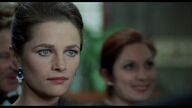
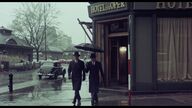
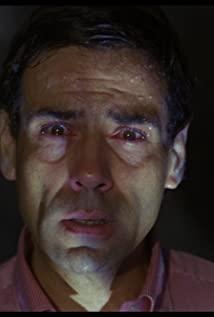
film flashed back and forth between Vienna and the World War II Nazi concentration camps in 1957. Max was a night gatekeeper of a hotel. He was used to turning off the lights in the lobby at night and sitting alone at the front desk, feeling lost in the deep. In the darkness, perhaps only in the black can he find the color that comforts his soul. Max has an ambiguous relationship with the countess who lives in the hotel. He seems to have a man-specific control over him, as well as a sense of bondage that most men do not have. One day, the couple who arrived from the United States disrupted the man's previous stability and self-confidence. He became conscientious, and his consciousness would unknowingly bring him back to the concentration camp period. The woman who once brought him so much pleasure and intoxication reappeared in front of him many years later. He didn't know whether this was a gift from God or a punishment that came to him?
As for that woman, she was also hopelessly involved in the memories of this "nightmare". The perverted officer's appearance in front of her again may be painful at first, and the lingering memories scene by scene. Reappearing, it gradually turned into a flavoring agent, or a catalyst, which excites her and makes her sink. A long-lost desire is teased by the memory, and the pleasure is breeding and spreading tirelessly, just like the alcohol injected into the body, the lukewarm breath forces every pore of the body to suck the residual sexual desire desperately.
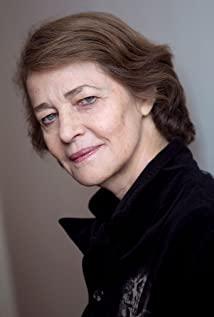
The memory of the two people in the concentration camp is actually not glorious. Max has a hysterical pursuit of sex. He found the best point of venting in the young Jewish girl Lucia. He constantly abused Lucia’s ketones with weird tricks. Body, food scars, and a strong chain to tease are all means of pursuing pleasure. They let the orgasm guide the desire to burst again and again, and make sex the fuse of love. The sadistic and abused roles between Max and Lucia in the concentration camp do not seem to be so antagonistic. The two people are more like lovers in love, and they have refined their pure feelings in the entanglement of sin and sex.
The most exciting part of the film’s description of the relationship between men and women is the opera house. The scene switches back and forth between the stage performance, Lucia sitting in the front row, and Max sitting in the back row, forming a multi-level narrative space. , And then pave the characters’ hearts together to flash back to the screen, vividly depicting the protagonist’s inner emotional world and the emotional communication between the characters. The music of Mozart [The Magic Flute] not only accompanies the sadomasochistic scenes in the concentration camps, but also reflects the passion that evokes the "reunion" of men and women in reality.
Sex and love,
however, in present-day Vienna, this kind of feeling has become a burden and a sin for both people, and the feelings are engulfed by evil, and become degenerate and gloomy. This abnormal relationship is incredible to the outside world. Military doctors and sex slaves have become lovers. After a few years, they were able to burn passion in each other's body. However, the identity of a man Nazi and a woman's identity as a witness to the evil deeds of the Nazis destined that the lives of the two people will not be unsettled. The Nazis and the SS asked men to surrender women because she had witnessed too many evil deeds in the concentration camps; the police were also looking for women, and her disappearance made her husband panic and uneasy.
If the relationship between the two people is only on the level of sex, then women will of course escape after relived the old joys with men, not only to escape the siege of the Nazis, but also to return to a peaceful life and enjoy life; men can also I happily handed the woman over to the Nazis, letting them make a thousand cuts, while still doing their own way, avoiding atonement and repentance, and avoiding spending the rest of their lives in prison and spitting. However, this kind of sex is crude, vulgar, and even with a certain deceptive nature. It only serves as a luster for grandstanding, and it is not even possible to go deep into the value of human life.
If we can say that [Paris Wild Rose] (Betty Blue) is the ultimate sex, then this film is about the love that arises after the extreme sex. The torture and masochism of the two people in the concentration camp may only be to satisfy the physical pleasure. However, when they met again afterwards, this pleasure quickly transformed from longing to inseparable love. They suddenly developed a sense of dependence and mutual affection. The sense of belonging entangled the entire souls of the two people. Sex-induced love becomes the main theme in the second half of the film. Two people close each other in an apartment and struggle through their days. Although they lacked a basic food supply, the sexually ignited love burned in their bodies. Although we don't know whether the groaning is the bliss of the climax or the pain of hunger, the love of the flesh and the skin has undoubtedly become the emotional bond that connects two people.
Discussions about whether sex and love are right or wrong have long been commonplace. Although the films [Paris Wild Rose] and [Night Gatekeeper] have a difference in the relationship between sex and love, "a chicken lays an egg or an egg hatches a chicken", but the main standpoint Still unified, sex and love are an inseparable whole, and both bear the responsibility of inheriting human feelings. The film entangles lust and love, and is exposed nakedly. Max said utterly in the film: ghosts, who can resist? Illusion, that voice and body, the bliss of life...
sex and death
At the end of the film, as I described at the beginning, two people were shot and killed by the SS remnants on the bridge, and the morning light reflected the two corpses on the bridge. When the apartment was running out of ammunition and food, and desperate, the lovers finally chose to die. They put on the uniforms worn in the concentration camp and welcomed death in the most respectable way. They supported each other and seemed to smell the breath of death. However, the two are not afraid. If death can be exchanged for another meeting, then why not? The moment the character fell, there was no regretful sadness, but after the infinite heaviness and fall, we saw the joy and lightness of rebirth. Perhaps when love and sex reach their extremes, people can only choose death, because only death can make love and sex live forever and be reborn.
In the face of death, sex was extremely fragile at that time. We may only admit the fact that in the face of sex, death is the only destination. In the film [Last Tango in Paris] (Last Tango in Paris), the writer Paul died tragically under Jeanne's gun. It was completely the crazy and stormy sex at the beginning of the film. Nagisa Oshima did not hesitate to invest in sex and death. [Sensual World] weaved a web of love and death, torturing while loving, while suffocating and tightening. Rebirth or destruction is both the end and the beginning. Behind love is destruction. After destruction, there is rebirth. Death is the seductive poppy that tempts the lonely soul who desires sex and love.
Written at the end,
regardless of political changes, the works of Italian director Liliana Cavni in the 1970s are still filled with the glory of humanity. The film uses human lens language to explain a little-known story. It may not be poignant or romantic, but it truly reproduces the inner world of marginal characters. The film uses sex to build the sustenance of human feelings, and uses death to guide this sustenance to the final destination. Although the critics do not all agree with the relationship between Max and Lucia in the film, they prefer to classify the film as pure sexual abuse, but this is not the essence of the film. As a woman, Cavni doesn't just want to make sex dominate and sing a one-man show, she tries to avoid some direct sexual behaviors, and uses a ritual style to describe sex and sexual intercourse. Moreover, the unique delicacy of the director's female makes the story of the film eloquent, and the emotional exchange and the exposure of the character's personality are integrated.
The political meaning of the film is actually very light. The director set the location of the story in the neutral zone of World War II-Vienna, in order to draw a clear line from politics. She is not willing to let such a sensitive topic have a relationship with sex. , And even less willing to let the film become too entangled in politics. Although the so-called "Nazi Restoration" and other comments appeared endlessly after the film’s release, they were all exaggerating the political intentions and tendencies of the film. Psychoanalysis methods focus on the exploration of the complex aspects of human nature.
In addition, while the film tells about sex, love and death, it also reveals the director’s distrust of society. Everyone living around Max pushes two people to death step by step, and they both push them down. Executioner on the cliff. In such a deceitful environment, sex becomes the only thing that is still pure, and the protagonist also naturally relies on orgasms to make love burst out. Of course, although the director’s distrust of society ultimately led to the film’s tragic tone, the awakening of the characters and the rebirth of death made the light sadness at the end reveal a little bit of light, and also made the film more intriguing.
05/02/04 3:24 published on March 2 Guangzhou New Entertainment
View more about The Night Porter reviews