
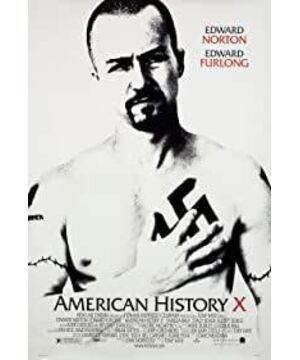
The theme of racial discrimination has been repeatedly emphasized in American movies for decades, which shows how acute this problem is in American society. The first thing that made my heart palpitations in this film is that blacks are not only discriminated against in the United States. Jews, Latin Americans, Asians, all immigrants, all have to endure that strange look on the street. Watching Korean supermarkets being smashed, black shop assistants being insulted in public, black robbers getting headshots on the street, I don't know how such a generation of Nazi-advocating youths can be cultivated in the so-called democratic America. Young people are just susceptible to incitement and incitement, and there are existing examples in China, but such unreasonable deeds of human nature are really appalling. In my opinion, the metaphor of the beast is not enough to describe their bad behavior. The beast will only hurt people out of the instinct of survival or self-defense. I am afraid that it will not blatantly provoke and kill because of some stubborn prejudice. The second is that the obsession with a kind of faith can reach the level of disregard of family affection. It is not an irreconcilable class contradiction. It is just because the views are difficult to unify and fight against the younger sister and mother. This kind of brutality is really heinous.
The narration of this film uses flashbacks and interspersed narratives, and uses color and black and white to distinguish the past and the past. I feel that this method has not benefited. In fact, the most important thing in this film is to describe the mental journey of the hero, how to become the leader of the skinhead, and how to change his mind and re-behave. These two places should be full of color, so that his mentality transition has a process of accumulation and precipitation. . It is a pity that these two points are placed in the black and white memories. Not only are they slightly stiff in connection with reality, but the length of the space is not enough, which greatly reduces the heavy meaning of the theme. The experience of his youth only mentioned the influence of his father’s racist views on him, and the shadow of his father’s murder; his experience in prison was only an experience of being sexually assaulted and having a relationship with a black man. The process of friendship between inmates. I am not sure how much impact these life experiences can have on his worldview. At least the film's narrative makes me feel a little light and unable to draw inevitable internal results from those accidental external events. In addition, my brother’s confession can give my brother Daigo, who is already deep in the mud, a bit idealistic. I don’t know how Norton’s eloquence can describe his prison experience. Anyway, it is difficult for me to visualize it. Get that kind of spiritual earth-shaking shock in the story.
The first time I watched Norton's performance was in "Fight Club", I always felt that his typical little white-collar image was better than Pete, who appeared in a mysterious identity. In this film, his speech and deeds are slightly abrupt due to the shortcomings of the narrative, and the other performances are still impeccable, an eloquent speech with Hitler-like appeal. What is unforgettable is that after he killed the black man and was restrained by the police, he turned his head and showed no fear on his face, showing a complacent smile. It seemed that he could just die for a certain ideal and he could not hesitate to die. This shows that The degree of prejudice is deeply ingrained in his soul, and it is more credible to say that he was eventually influenced than to say that he was consumed with will. In any case, the film’s failure is too short. Although there is an atmospheric background such as the Asaka ocean tide and accent chords, the frankness of the story itself wastes such a subject of great depth and breadth.
Welcome to follow the WeChat public account Qiao_Daddy.
View more about American History X reviews